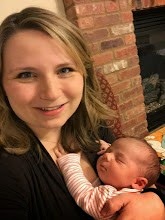
Sunday, November 17, 2013

He agreed.

Don don don da! Bryan has agreed to blog again!

I wanted to call the series My Husband Told You So, but that got vetoed.

I'm going to send Bryan popular articles that I see on Facebook or on my blog roll or just wherever (please feel free to send him some too!). Then he will basically fact check the article with his economics knowledge.

We do this mostly in long car rides, but now, to my great excitment, Bryan is ready to tip-type it up for the interwebs.

Thursday, April 26, 2012

Maybe We're Not Those People

Dinners aren't really as deep as they used to be with me being pregnant. Mostly because dinners are either us talking about silly stuff if we're out to eat OR if we're home, I'm laying on the couch while Bryan cooks or runs to get take out.

We have been having out big discussions on our three hour drives to Oklahoma City. We perform at a theatre there regularly, and we enjoy the drive. Mostly because I never know what we'll talk about. One drive we talked about babies (Did I tell you we are expecting a son?). Another we reiterated that our political and religious beliefs are so bizarre to everyone else but nearly identical to each other. Another we talked about what we really need for the baby. Another we talked about capital punishment.

What Bryan said in the car last weekend has just stuck with me. It resonated, and I am taking time to really consider all the implications of what this means. And whether it truly reflects how we feel.

"Maybe We're Not Those People"

Bryan applied for jobs last fall, but we centered our search on South Carolina and Florida - which limited his opportunities to a handful. We felt that we wanted to be around family, to be within driving distance. This was about the time Bryan's mom was diagnosed with Stage IV cancer.

We have been pretty satisfied with our lives in Oklahoma aside from the lack of Target and missing hustle/bustle culture. Our jobs are great, our house is decent, our improv is great, our marriage is sweet, and our bank account is the best it's ever been. We were disappointed this spring when Bryan's job opportunities fell through, but the more we think about it, with a baby on the way and my new job, the more staying where we are as been the right thing.

So where does that leave us for this fall? Do we want out? Sure.

Bryan asked me, "How important is it that we move to a school near family?" My immediate reaction was, "Very!"

Then he did his economist thing that he always does where he asks, "If we were choosing between two jobs, one close to family and one somewhere else, how much more would I have to make at the far away job to be worth it?"

(Note: I sort of hate it when he does this because it makes me really think about what I'm saying. But it's good for me to think about what I say. And it's good for Bryan to understand the intensity of my feelings...or the frivolity.)

We bargained back and forth, and I realized that it wouldn't take much more of a pay increase on Bryan's salary for me to think it was worth it to live farther away. Which led to Bryan saying the phrase, "Maybe we're not the kind of people that live near family."

What?

And then when I stopped rejecting the idea and thought about it, I realized he's right.

We have lived away from family for several years now, and I have lived away from mine since 2005. We are the far away brother and sister, the far away kids. That's who we are. We're the far away family.

We enjoy travel, we are great at packing, at flying, at driving, at planning vacations. We can't handle family for very long, and we are (very) different from our families. If we lived close to family, our entire life would change. We would feel pressure to attend family gatherings, to spend less time with friends or at festivals, to include them in more of our lives.

We would lose our favorite part of our marriage: our privacy.

We have the luxury of skype and phones and cheap airfare to stay in touch with family. We also have the luxury of being able to take advice, roll our eyes and never use it. We can say, "Oh tickets are too expensive," and pass on family events that we don't want to attend. We can spend our money and our time how we like. We can stay out late with friends every weekend. We can spend Sunday mornings how we like. We can do whatever we like. We can enjoy our freedom!

And I think he's right. I value our freedom over our access to family. And so does he.

Does that make us assholes? Nope. Does that make us awesome? Probably. Maybe we're not those people that live near family. Maybe we don't even want to be.

Ware us, and we are in control of our lives and the choices we make. We're those people.

Saturday, April 16, 2011

Fights

Bryan and I believe similar, if not the same, things when it comes to lifestyle, politics, family, leisure, education, religion and health.

Our dinner conversations go mostly like this:
"Look at this thing that the world is doing wrong."
"I know! If the government wasn't working itself into EVERYthing, it would be okay."
"Capitalism!"
"Freedom!"
"Hot people!"
"Let's get another PBR."

We don't fight very often in our house. Even the little stuff gets handled in a similarly silly way.
"Hey, the house is a mess."
"It's your stuff."
"Yeah, but you loved me and my mess when we were dating."
"We're married."
"Let's split it up, but you owe me."

If it doesn't go like that, it will be a secret internal battle that we each fight. Like, if I notice something is messy, I'll clean it and parade in front of the perfectly clean living room when Bryan gets home. He'll be like, "Woa, looks great babe!" and then he'll take me to dinner, my choice. Or if I'm at the gym, I'll come home and Bryan will have done all the dishes, washed the counters and started dinner. I'll be impressed, kiss on him while the chicken cooks, and he'll get to force me to play Arkham Horror with him. (like last night)


Sometimes....we do fight. Like last Saturday. It was in the car. Even with our GPS and my iPhone, we still could not find the game store we were looking for in a suburb of Tulsa. We drove up and down the same road three times, tried neighboring roads, nothing. We could not find our way to the stupid game store. I was getting angry, Bryan was calm and trying to use my iPhone's Google Maps app. His calm demeanor made me angrier. How could he be so calm in this moment of true frustration?!

My frustration made him angrier, too, but he was keeping it all in. Turns out, we deal with frustrating situations like being lost in completely opposite ways. I would say our biggest arguments have been about which way to go, like that time in New York City about two years ago when we were trying to make it to Becky's place and we ended up in Coney Island at midnight (creepy). Even with all the technology and a smaller city, we still couldn't find the place. And my frustration wasn't helping Bryan keep his cool, and Bryan's cool wasn't making me feel any better.

So we had it out in my little Elantra:
"I want you to be angry!"
"You're angry enough for both of us."
"Do you LIKE being lost!?"
"I'm trying to keep my cool, so we can eventually find this place."
"Arghhhh! We're LOST!!!"

Okay, so typing it out, I was definitely overreacting. When we cooled down and talked about how we need to handle these situations (I'll be cooler, Bryan will be more outright about his frustration), we eventually found the place. Which was good because who wants to hit a game store with sourpusses.

Sunday, March 13, 2011

Trade: Marriage Edition

Trade is the transfer of ownership of goods and services from one person to another. And a network that allows trade is a market. My marriage is a busy market.

Bryan and I trade regularly. We have ongoing daily trades like Bryan emptying the dishwasher and me preparing meals. We trade long-term, too, like Bryan's job that moved us to Oklahoma: he chooses where to live and I choose where we vacation. We also trade with money. Bryan is currently paying me not to bring home a puppy. Most of the time our trading is simple and with a little bit of haggling, we can exchange goods or services that make both of us happy.

Recently, I had to trade my pride.

It was awful. But Bryan had spent the last evening with me and my friends being the designated driver while we gossiped about The Bachelor and Tosh.0. Here I was, at the house of Bryan's friend and also economics professor. I'd played all sorts of weird economics games there (Wealth of Nations, Carcassonne, Puerto Rico, Dominion, Pandemic) knowing it was a trade.

Something was different this time. The game on the table was one that I promised myself I would never play. The nerdiest of all games: Magic the Gathering.
Immediately, I started backing out and offering to play any other game. They poured me another glass of wine and peer pressured me into playing. They gave me the devil deck and started explaining the spells, enchantments, creatures, sorcery, graveyards, tapping, wizards and all that nerdy stuff. The game is very complicated and back in the 1990s, it was novel.

First, I ganged up with the other wife and attacked Bryan and his friend. We killed the boys off quickly and then she killed me.

Three. Hours. Later.

It was brutally complicated, but it was more fun than I thought it would be. I liked that my deck had special powers that their decks didn't have. I liked that you could build your deck out of the thousands of cards. I liked that there were demons and devils that could take lives away from players without costing me anything. I liked beating the professors. I liked that some people think the game is evil. I like a lot more of the game than I thought I would. It scared me.

That's kind of how it goes in my marriage to Bryan. He loves to trade things I've never tried (or think I won't want to try) because he enjoys pushing my comfort zone, and he has a quest to bring out the inner nerd in me.

We're operating in a free market: property rights are voluntarily exchanged at a price arranged solely by the mutual consent of sellers and buyers. We do not coerce each other, in the sense that they obtain each other's property rights without the use of physical force, threat of physical force, or fraud. Instead, we engage in trade simply because we both consent and believe that what they are getting is worth more than or as much as what they give up.

Sunday, October 17, 2010

Marriage Trade


Bryan is not just an economist in the classroom or on paper. He's an economist everyday in all aspects of his life, even marriage.

Most people say marriage is full of sacrifice, but they don't know the marriage of an economist. Bryan doesn't believe in sacrifice as an effective method of dealing with things or people. When you sacrifice, you are giving up something valuable for something less valuable. That's the nature of the word.

Bryan uses fancy economic terms words to describe this. A Pareto gain is something that you can do and any everyone wins. Kaldor gain is when someone wins and someone loses, the gains to the winner outweigh the loss of the loser. According to Bryan, sacrifice is the opposite: the loser loses a lot and the winner gains very little.

Trade and bargaining ensures that all Kaldor gains become Pareto gains because there is compensation. For each thing you'd like to have in marriage, you'll have to compensate your partner. This leads to conversations with Bryan that go something like this. "How much do you want to go to Patron's? $10? $5?" Sometimes it's hard for me to put price tags on experiences or items or choices, so Bryan has altered his approach with services, freedom and gifts.

In order to show the success of our trading, here are some recent trades made in the Buckley house:
I plan our improv schedule, apply to festivals, do the marketing and Bryan packs for trips, prints out posters, tells me where to put them, gathers all props (bells, slips of paper, whistle, etc)

Bryan got Starcraft and I got a weekly stipend to eat out with girlfriends

Bryan mows the lawn and I make an intense, fancy meal.

I clean the kitchen and the bathrooms; Bryan does the laundry and the dishes.

Bryan makes the budget and keeps stats; I do the shopping and the bill paying.

Everything has a price. This is one of Bryan's foundational thoughts.

Friday, September 24, 2010

Why An Economist Can't Love Dogs


Since we moved to Oklahoma, we have moved into a house with a fenced in backyard and we're doing well financially. I thought it fitting to convince Bryan that we needed a dog. Bryan has been anti-dog since we were dating. Partly because his family is a no pet family, but mostly because he's an economist.

Today, I sent Bryan a quiz from Animal Planet that tells you what breed dog will be the best fit for you. I thought maybe if he could find a dog that matched his personality and desire for little effort he might find his way to my side of the camp. Oh, boy, was I wrong!

Instead, this is his email:
Alright, I played your game. My result was:
A welsh corgi
http://animal.discovery.com/breedselector/dogprofile.do?id=1170

This does not mean I want a dog!

This site says the cost of owning a dog runs about $1,000 per year. $14,000 over the life of a dog.
http://www.peteducation.com/article.cfm?c=2+2106&aid=1543

The cost of a 1 week Mediterranean Cruise:
$2,000 for plane tickets to Spain
$2,600 for the cruise
$2,000 for gambling, drinking etc

Total: $6,600
http://www.royalcaribbeandeals.co.uk/fusion/detailship.pl?shipid=369&sid=7477

So would you rather have 2 amazing trips and have $800 left over for clothes or a dog?

Ha ha ha. See, I can play this game too.

Love you, my pet.


He beats me on the money and the facts. And that cruise sounds incredible. How can you argue love and affection of a dog against the reasoning of an economist? I'll have to keep trying.

Thursday, September 23, 2010

An Economist's Birthday


My husband The Economist celebrated his birthday yesterday exactly how he liked.

His present arrived in the mail on Monday, and after a fascinating argument about opportunity cost, he convinced me to let him open it. Why should I let him wait two days to enjoy something that he could enjoy now?

Then, there was his cake. Of course, every year I make something different but it revolves around his favorite flavor: chocolate. This year, I made Snickers Cupcakes. It made sense to use two complementary goods to create one highly demanded product (man, I should be an economist!). These cupcakes are superior to all other cupcakes in that once they are baked from scratch, I cut the center out to fill it with Snickers pieces and frosted them with homemade frosting made from one pound of sugar. Sweet lord, they were sugary! Due to the diminishing marginal returns, we could only enjoy one.

For dinner, we went out to dinner the local steakhouse (there's only one in our small town). It was nice, and Bryan had one of his favorites: a thick, messy burger. We enjoyed some consumer surplus because the dessert was free!

Okay, that's enough of my attempt at economics. Next time, I'll be sure to get Bryan to help me, but it's his birthday, so a man should rest.

Friday, September 17, 2010

My husband is better than yours.

Part of being happy in my marriage is that Dr. Bryan Buckley is just so freaking awesome. One evening, he's going on about the literature of Ayn Rand over stir fry. Another night, he's explaining the economics of prostitutes over my roasted chicken.

The other night, Bryan provided everyone (and my reblogging friend Harrison) with a little economics lesson. Seems like he beat even THE economics blog to the punch: The Prisoner's Dillemma Makes a Reality TV Appearance.

Boom. Let's go out for margaritas and fajitas!

Monday, September 13, 2010

Economics of the Bachelor Pad

Note this economic analysis came not of Dr. Buckley's desire to watch the Bachelor Pad. He has a very convincing wife who loves reality tv and strategy gameshows.

Tonight was the finale of The Bachelor Pad, which if you haven't been watching, let me catch you up:
A bunch of the favorite and not so favorite contestants of previous seasons of the Bachelor (the dating game show with 1 guy and 25 women or 1 lady and 25 men) come together in one giant sexy house to compete for $250,000 and possibly a chance at love. Various alliances were made; many relationships formed; competitions were intense. For the final six, the top three guys picked a girl to create a team, or a couple. Everyone has been voted out except one couple Natalie and Dave.

Okay, you're caught up. We have Natalie and Dave. Natalie is a party girl, and she has kissed the most guys, drank the most and played on different sides of the ladies. Dave has backstabbed some of the guys, broken hearts of two ladies and had a good time. But, through all of this, the pair claimed they were developing a slow relationship which might possibly lead to love.

Here they are, so close to winning, and the host Chris Harrison offers them a choice. They can choose to share the $250,000 evenly, or they can choose to keep it all for themselves. Only, it gets more interesting.

If they both choose to share it, they will split the money evenly and each get $125,000.
If one chooses to share it and the other chooses to keep it, the one who chose to keep it gets the whole $250,000 and the other gets nothing.
If they both choose to keep it, the money gets split evenly among the contestants who've been kicked out and are sitting onstage.

Okay, get ready for some economics.

This is a Prisoner's Dilemma. What you need to think about is a Best Response Function. What is your best move in response to whatever they do?

Let's think about it from Dave's point of view. If she's definitely going to keep the money for herself, does he prefer to play keep and give the prize up to the losers of cast or does he prefer to share, so she can win? If Natalie's going to play share, what is his best response? Would he prefer to split the money with her or screw her over? If he preferred giving her the money rather than the chance of having to give the money to the rest of the cast, then share is his best response in either case.

Natalie might know that, and then she has her best response function. Does she want to share the prize money of $250,000 with him or does she want to keep it all? What do you think happened?

Sunday, September 12, 2010

Cover Charges and Other Bar Economics

This weekend, we went to a bar that had a $5 cover charge. Once inside, we bought a round of drinks. And another. We were having fun with some friends, and I remembered we had beer at home.

I said, "Bryan, let's go home and drink some free beer!" Well, that was not the right thing to say. We paid for the beer, so it's not free.

I continued my non-PhD thought process and said, "Let's get one more round since we paid $5 to get in!" Again, not right.

Bryan explains that the $5 cover charge is a sunk cost, so it shouldn't have any bearing on our current decision making process. It's a common misconception called the Sunk Cost Fallacy.

Bryan continues, it should be as if we got in free; it's essentially the same. What you want to think about is the benefit of being there for another hour versus the opportunity cost of being there for another hour. Because the cover charge is something we've already incurred, it does not really affect the cost or benefit of being there for another hour.

And who says economics doesn't relate to the real world?

Sunday, August 15, 2010

Professors of Different Fields Make Different Amounts

We had dinner last night with the manager of the Jazz Lab in our new small town. She was a wonderful guest who came bearing wine and fancy cheese which accompanied my pasta dish.

Over dinner, she mentioned the salary of the jazz professors, those with doctoral degrees and years of experience, and I was surprised that it was much lower than what Bryan is making.

Apparently, that's the case. And for my economist husband, it was obvious that those of different fields would make different amounts. But for those of you who think like me, let me break it down:

According to Salary.com's Salary Wizard (median salaries),
an accounting professor makes $104,000
a business professor makes $75,111
a chemistry professor makes $51,445
a civil engineering professor makes $68,311
a communications professor makes $52,450
a drama professor makes $48,380
an economics professor makes $67,573
an education professor makes $53,000
an English professor makes $50,750
a music professor makes $49,500

Bryan explained to me that part of the salary for anything represents your opportunity cost which is typically what you could do somewhere else.

If you think about an accountant, in order to get her to be a professor, you'd have to pay her at least what she would make in the business world. You won't get people to leave the business world unless you pay well. Also, there's the difficulty in the field of study that contributes. Accounting is really difficult; it's complicated, and that's why they make more money. It's all about opportunity cost, apparently.

Interesting. I learned something new.

Tuesday, April 6, 2010

Don't Send Emails Like This

Oh my god brian for the love of god I will send it to you today im so sorry I haven’t even checked my email thank you so much for reminding me im so sorry. And thank you for the update!
-J

Sunday, April 4, 2010

Examples To Use in Class

As I help grade the multiple choice section as carefully as possible, Bryan furrows over his students' handwritten attempts at economic theory.

Reading over questions 16-20, I giggle. Bryan is using the country of Dortugal (Strongbad, anybody?) and for his goods: Pogs and Slammers in his international trade section. I asked Bryan if he knew that he was the coolest professor ever. Of course, he's bashful and tells me to stop. But then he listed for me all the great (and eccentrically Bryan) examples he uses for his students.

Dr. Buckley's Top Examples of Goods
-rubber ducks
-slinkies
-skip its (commercial - I was a skip it addict as a child)
-rubber chickens
-koosh balls
-toobers and zots
-legos
-drunks
-wine and cheese
-orphans and movies: Brad and Angelina (comparative advantage)

I want to take his class next fall.

Wednesday, March 31, 2010

Excerpts from Dr. Buckley's Syllabus


Tests are par for the course in college. Dr. Buckley is no different: he offers three exams. And he has the coolest exam policy I've ever heard of.

There are no makeup exams - for any reason. According to the syllabus, you can decide not to take either the 1st or 2nd exam. If you opt not to take the 2nd exam, then the 15% of your grade represented by that exam gets shifted to your 1st and Final Exams, so that they are worth 17.5% and 27.5% respectively. You can not choose to miss both the first and the second exam, and you must take the final.

Those are the rules. Do what makes you best off.


Can you say live your life according to what you teach? This man is such an economist.

Tuesday, March 30, 2010

Big News

This morning, I've made it public internet knowledge that my husband, the professor, has accepted a tenure track job at NSUOK. What's the big deal? I had no clue. When I was a student, I didn't pay much attention to the professors and their career tracks. Here's the breakdown, as I understand it from Bryan.

GRAD STUDENT: teaches a section or two; no real respect in the research world
ADJUNCT PROFESSOR: teaches just a few sections, usually by choice
VISITING PROFESSOR: one to two year contracts, focus on teaching, most PhDs start here anywhere from 1-15 years
TENURE TRACK PROFESSOR: THE job, after 5-6 years teaching and researching, you are eligible for tenure, stability and prestige
TENURED PROFESSOR: after being a great teacher and generous with research, you've "hit it big" aka you can teach whatever you want and can't get fired
CHAIR OF DEPT: you can decide who stays and who leaves, runs department

Now you know.

Friday, March 26, 2010

Writing for Publishing

Everyone knows the saying "Publish or Perish" but does anyone know how to publish? I didn't know, and last night, Dr. Buckley enlightened me.

Here's my interpretation of How to Write a Publishable Research Paper in Economics
1. First, think of a clever idea, preferably something topical to current news and social awareness (i.e. environmental economics or political economics).
2. Develop a mathematical model (90% of the time, it's calculus) that is solvable, applicable and interesting.
3. Cleverly find a data set to use for your mathematical model. This is the big one. It's not really a skill, but luck: finding a set that is complete and manageable. Then it's crunching numbers and crunching more numbers. Remember to account for differences in characteristics (i.e. whether a state is a coastal state).
4. Apply a clever econometric method.
5. Revise, edit and revise.
6. Submit to one journal at a time. If you are accepted, great; add it to your resume. If you are rejected, select another journal and resubmit.

Additional note: you might have a good idea and find that there is no data. And that sucks.

Apparently, you have to be an economist, a statistician, a calculus mathematician and a writer to pull this thing off. I'm already exhausted.

Wednesday, March 24, 2010

Teaching as You Learn

I always thought you could learn the most from someone who has been teaching the same thing for years, you know, an expert. Well, Dr. Buckley offered an interesting alternative.

He claims that a teacher who just relearned the material might actually end up being a more effective teacher. Without the routine lecture, a teacher who teaches something new to their course catalogue could offer more insight, having just refreshed their own knowledge, they would be better able to know which parts are more difficult and require extra time for understanding. Sometimes, Dr. Buckley says, teachers are so used to their line of thinking that it's difficult to see how someone might not understand.

Oh, the tough life of being a genius...

Wednesday, March 3, 2010

Variety is Beneficial

One of the benefits of trade is that variety is good. Bryan was telling me that when the Berlin Wall was torn down, Eastern Germany had oranges and apples for the first time. The introduction of these fruits being a benefit of trade. I still wasn't convinced that it was a benefit, this new introduction of fruit. Because how could people who had never had oranges and apples consider these new fruits a benefit? They had never tried them before, and maybe they would never miss them.

Apparently, it's even simpler than that. Bryan broke it down to something I could understand: chocolate. We have one bag of chocolate that is all milk chocolate truffles, and we have another bag of chocolate that has four flavors. If you eat one piece of chocolate from the first bag, it's delicious. If you eat a second one, it's delicious. If you eat a third, it's delicious. At some point, it's going to get less delicious. However, if you eat from the second bag, you will eat perhaps a white chocolate truffle. If you have another truffle, it might be dark. If you have another, it could be milk chocolate. And so on. Because you have four different varieties, the rate of diminishing marginal returns is spread across all four, resulting in a better experience, or a benefit of trade.

Obligatory Introduction


My husband Bryan is an economics expert, literally. He spent a decade at Clemson University (six of them graduate school), emerging victorious with the king of all degrees: his doctorate. Recently, our dinner table has become our own intellectual battleground for discussions about world events, new stupid laws and issues we have with things we are reading.

With all the learning, I'm taking good notes. This blog is my place to share the simple brilliance Bryan shared with me. He's patient in his speaking and clear in his explanations. It's really great to learn from someone who loves what he's talking about and loves the person he's talking to. I think it's the most conducive learning environments out there.

So, why blog? Because economics is something everyone could learn more about. Because I prefer typing to handwriting. Because I want Bryan to see how brilliant a teacher he is. Because there actually is an easy way to explain economics, and that's the way Bryan does it.